


Most inventors who call us ask two questions. “Can I patent this?” And right after that, “How do I stop someone from stealing it?”
The bottom line first: you cannot patent an idea on its own. You can patent an invention: a specific process, machine, product or composition that is new, not obvious, and described clearly enough that someone skilled in the field could make and use it. The path from idea to patent is about turning your concept into that kind of invention, keeping it confidential, and filing with the United States Patent and Trademark Office (USPTO) before anyone else does.
At Jafari Law Group, our patent attorneys guide inventors and founders through this process from our office in Irvine, California. Here are the steps, in the order they usually happen.
Can You Patent an Idea?
Federal law allows a patent for “any new and useful process, machine, manufacture, or composition of matter,” or any new and useful improvement of one (35 U.S.C. § 101). Abstract ideas, laws of nature and natural phenomena are not patentable by themselves.
The application must also describe the invention in enough detail that a person skilled in the field could make and use it (35 U.S.C. § 112). That is where many ideas fall short. “A phone case that charges itself from sunlight” is an idea. A described arrangement of panels, circuits and materials that actually does it, with drawings and alternatives, is the start of an invention.
You do not need a working prototype to file. But you do need to understand how your invention works well enough to explain it on paper. If you are unsure whether your concept is there yet, our article on whether your idea qualifies for a patent walks through the basic tests.
Step 1: Write Down and Date Your Invention
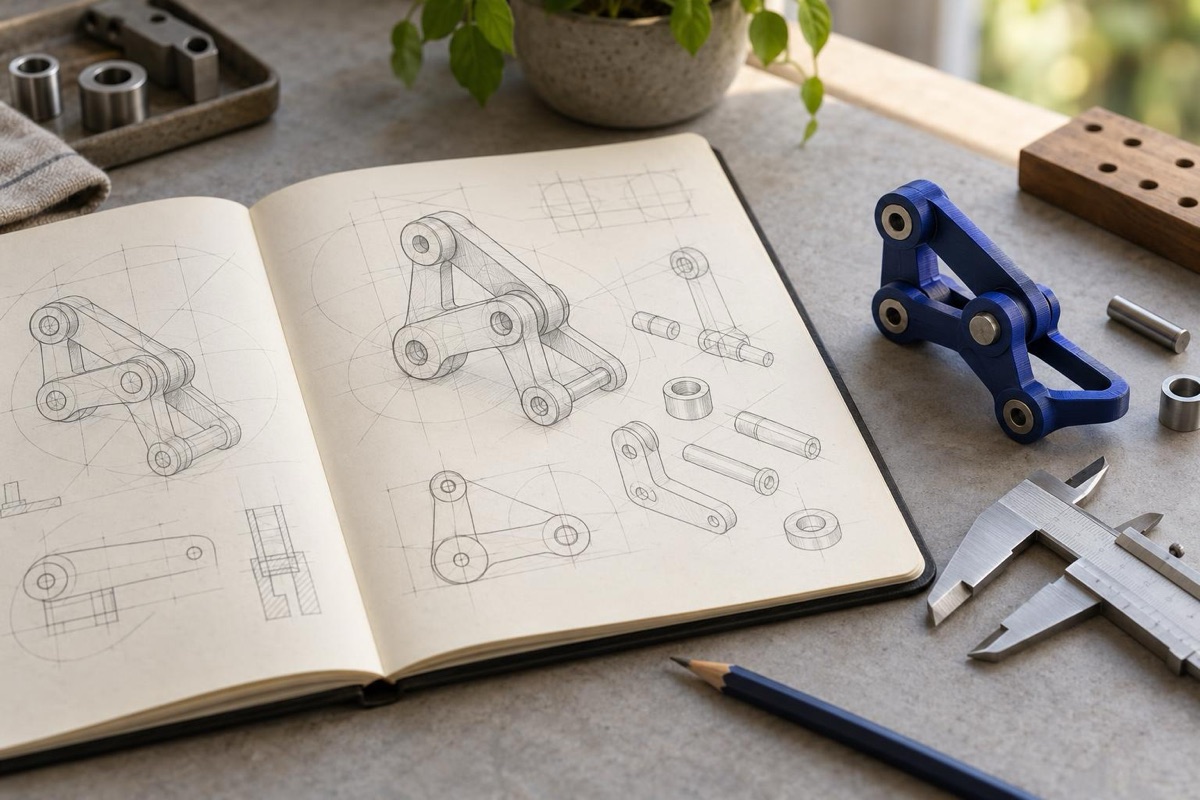
Start a written record. Describe what the invention does, how it works, what problem it solves, and how it differs from what is already available. Add sketches, photos of any early models, and every variation you can think of: other materials, shapes, sizes and uses.
This record does two jobs. It becomes the raw material for your patent application, and it helps you see gaps in your own thinking before you spend time and money on a filing. Keep it somewhere private and date each entry.
Step 2: Keep It Confidential Until You File
This is the step inventors most often get wrong. Under U.S. law, anything made available to the public before your filing date can count against you as “prior art,” including your own product launch, sale, offer for sale, trade show demo, crowdfunding page or article (35 U.S.C. § 102(a)(1)).
U.S. law does give inventors a one-year grace period for their own disclosures: if you disclose the invention publicly, you generally have one year to file before that disclosure counts against you (35 U.S.C. § 102(b)(1)). But we do not recommend relying on it. Here is why. Many other countries do not offer a grace period, so a public disclosure before filing can end your chance of patent protection abroad. And someone who learns of your invention may file on their own improvement in the meantime.
The safer course is to file before you show the invention to anyone outside a confidential relationship. If you must share it with a manufacturer, investor or developer before filing, use a written non-disclosure agreement.
Step 3: Check Whether Your Invention Is New
To be patentable, an invention must be new (35 U.S.C. § 102) and must not be obvious to a person having ordinary skill in the field (35 U.S.C. § 103). Before you file, it makes sense to look at existing patents, published applications and products to see what is already out there.
A preliminary search will not answer every question, but it can save you from filing on something that already exists, and it helps your attorney draft claims that stand apart from what came before. Our guide on how to search for a patent before you file explains the free tools and the limits of searching on your own.
Step 4: Choose the Right Type of Patent
Most inventions are protected by a utility patent, which covers how something works: its structure, function or process. A utility patent generally lasts until 20 years after the application’s filing date (35 U.S.C. § 154).
If what is new about your product is its appearance, a design patent may be the better fit or a useful addition. A design patent lasts 15 years from the date it is granted (35 U.S.C. § 173). We compare the two in our article on choosing between a design patent or a utility patent.
Step 5: Decide Whether to File a Provisional Application
A provisional application is a simpler filing that secures an early filing date without formal claims. It is never examined, and it lets you use the term “patent pending.” To keep the benefit of that date, you must file a non-provisional application within 12 months (35 U.S.C. §§ 111(b), 119(e)). Treat that 12-month deadline as firm. It cannot be extended the way most USPTO deadlines can, and the only relief is a narrow two-month window to restore the benefit by petition if the delay was unintentional (37 C.F.R. § 1.78(b)). Do not plan around it.
A provisional can be a smart move when you need to talk with investors or test the market soon. But it only protects what it describes. A thin provisional that leaves out key details may not support the claims you need later, which defeats the purpose of filing it. We explain the trade-offs in provisional and non-provisional applications.
Step 6: Prepare and File the Application
A non-provisional utility application includes a written specification that describes the invention in detail, one or more claims that define the legal boundaries of your protection, drawings where needed, and an inventor’s oath or declaration.
The claims are the heart of the patent. Claims that are too broad may be rejected over prior art. Claims that are too narrow can let a competitor make a small change and walk around your patent. A well-drafted application has both: broad claims that cover your invention, and narrower claims that serve as fallback positions if a broad claim is ever challenged. Getting that balance right takes both legal skill and a real understanding of the technology.
Timing matters, too. Since March 16, 2013, the United States has followed a first-inventor-to-file system. If two people invent the same thing independently, the one who files first generally has the better position. That is one more reason not to wait.
Step 7: Work Through Examination
After filing, a USPTO examiner reviews your application against the law and the prior art. It is common to receive at least one office action: a letter explaining why some or all claims are rejected. You reply with arguments, amendments or both. Deadlines for replying are strict, and federal law sets a maximum of six months (35 U.S.C. § 133).
Many applications go through more than one round before the examiner allows them. An examiner interview can often shorten that process. We use interviews to preview the examiner’s concerns and then address them directly in the written response. Once the application is allowed and the issue fee is paid, the USPTO grants the patent.
Common Mistakes Inventors Make
- Pitching the invention publicly, posting it online or selling it before filing.
- Filing a provisional application that describes only one version of the invention.
- Missing the 12-month deadline to follow a provisional with a non-provisional application.
- Writing claims that cover only the exact prototype, which competitors can design around.
- Assuming that no product on the market means no prior art exists.
Frequently Asked Questions
Can I patent an idea without a prototype?
Yes. You do not need a working prototype. You do need to describe the invention well enough that a skilled person could make and use it.
What should I do before I tell anyone about my invention?
Write it down, keep it confidential, and ideally file a patent application first. If you must share it before filing, use a written non-disclosure agreement.
Should I file a provisional application first?
It depends on your timeline and budget for development. A provisional application secures an early filing date and gives you 12 months to file the full application, but it must describe the invention fully to be useful.
How long does a patent last?
A utility patent generally lasts until 20 years after its filing date. A design patent lasts 15 years from the date it is granted.
Can I file a patent application myself?
The USPTO allows inventors to file on their own. Because the claims define what you can enforce, many inventors work with a registered patent attorney to avoid protection that is too narrow to be useful.
Talk With a Patent Attorney About Your Invention
Turning an idea into a patent is a process, and the early decisions about disclosure, filing strategy and claims shape everything that follows. Jafari Law Group is based in Irvine and serves inventors and businesses throughout Orange County. Our founder, David Jafari, holds bachelor’s and master’s degrees in electrical engineering and is registered to practice before the USPTO, and our attorneys have drafted and filed more than 400 patent and trademark applications.
If you have an invention you want to protect, talk with a patent attorney at our Irvine office before you show it to anyone else. Request a free evaluation online or call 949-362-0100.